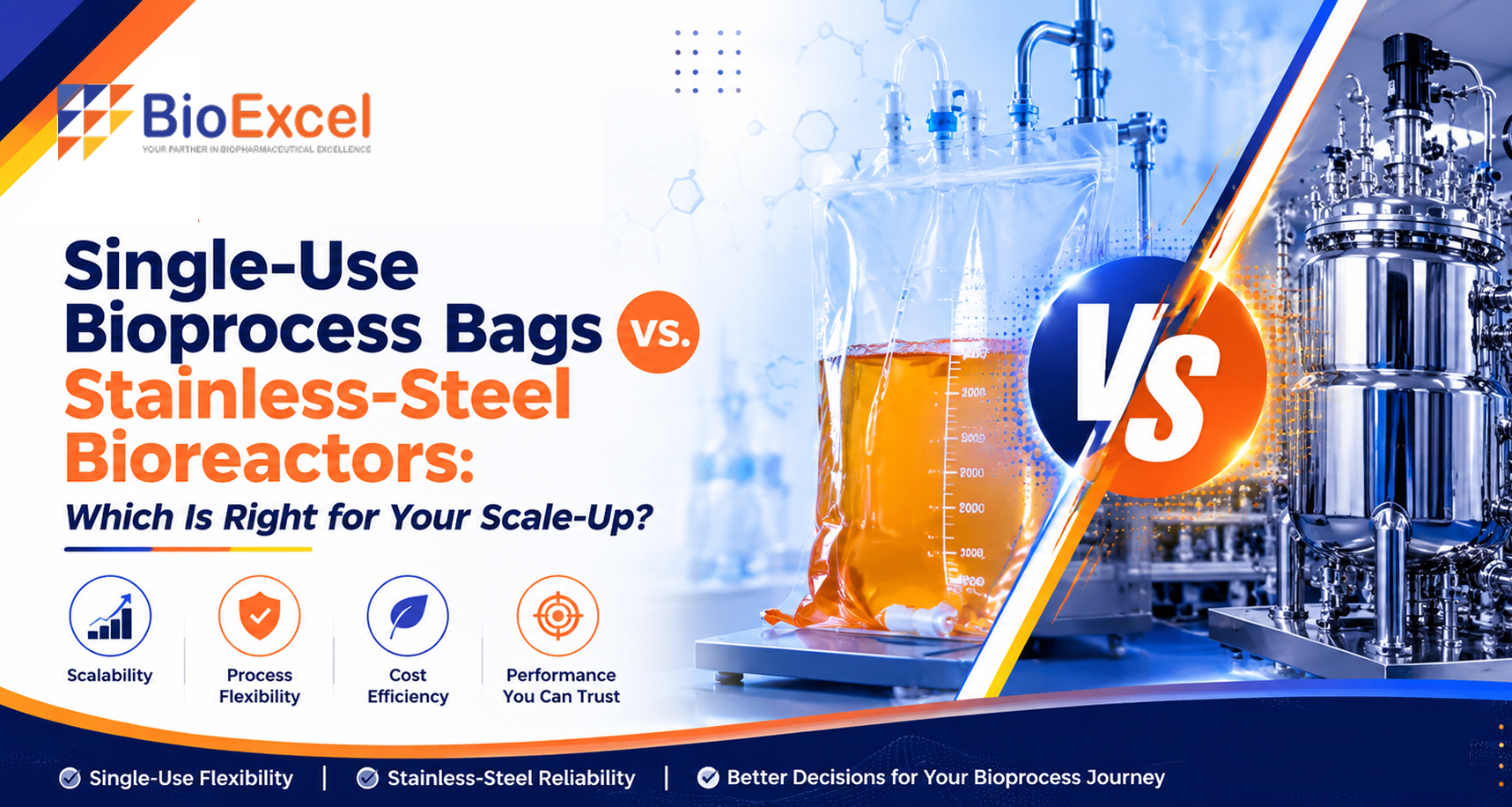
Single-Use Bioprocess Bags vs. Stainless-Steel Bioreactors: Which Is Right for Your Scale-Up?
Selection of a processing system when scaling up your biopharmaceutical process can have a direct impact on costs, lead times, contamination concerns, facility design and long-term flexibility. Single-use bioprocess bags provide the most flexibility, fastest turnaround and minimum need for cleaning. Stainless steel bioreactors still provide value as we grow our capacity for high volume, long-term commercial manufacture of single products.
What are Single-Use Bioprocess Bags?
Single-use bioprocess bags are disposable, sterile systems made from high-performance polymer materials that are prepared for use in biopharmaceutical processes. They are often used in the processes of mixing, storage, transferring, preparing buffers, preparing media, sampling, harvest, and other product contact applications. Often, these assemblies and bag systems will arrive sterile, or ready for use, or have undergone a gamma irradiation sterilization step, which will often simplify the number of required cleaning validation studies, reduce the frequency of steam in place (SIP) cycles, and will save time that might be spent cleaning disposable product contact parts. These systems can minimize the risk of product contamination because they are new each time they are used and, thus, are ideally suited for multi-product manufacturing.
Why Single-Use Bags Are Gaining Ground
Single-use systems are popular because they help manufacturers move faster. In scale-up, speed and flexibility matter. A process may still be changing, batch size may shift, or demand may not be fully known. In these situations, building around fixed stainless-steel infrastructure too early can limit flexibility and increase upfront cost.
Single-use systems can support:
- Faster setup and changeover
- Lower upfront facility investment
- Reduced cleaning validation for disposable product-contact parts
- Lower water, steam, and cleaning chemical usage
- Reduced cross-contamination risk between batches
- Easier process changes during scale-up
- More flexibility for multi-product facilities
Cost studies also demonstrate opportunities where single use makes an undeniable advantage. A virus filtration cost study comparison found that disposable single use was associated with 18% less in annual cost of goods, 88% less in material cost, 63% less in total labour and 52% less in capital and facility costs versus stainless steel. It's true consumables cost an additional 28%, but the total annual cost of disposable in that instance was still better. That is the key point: single-use may have recurring consumable costs, but it can reduce labour, facility, cleaning, and capital burden.
Where Stainless Steel Still Makes Sense
Stainless-steel bioreactors have been used in biopharmaceutical manufacturing for decades. They are durable, proven, and familiar to engineering and quality teams.
Stainless steel may be the better choice for:
- Very large commercial production
- Dedicated single-product facilities
- Long-term production campaigns
- Processes requiring high pressure, high temperature, or harsh cleaning conditions
- Applications outside the validated limits of disposable films
At a very large scale, stainless steel can become more economical over time. The upfront investment is high, but the equipment can be used for many years when the facility runs at high utilization.
The trade-off is time and cost. Stainless-steel facilities require fixed tanks, piping, clean utilities, CIP systems, SIP systems, cleaning validation, qualification, and extensive documentation. Depending on the project, a stainless-steel facility can take several years to build, validate, and become fully operational.
The Scale-Up Decision
Most teams aren’t deciding between tiny lab-scale batch and huge stainless steel facility. They fall somewhere in between. Single-use works best for pilot and scale-up. As such, you may still need to change your process or may see size changes or fluctuations in demand that your current stainless steel could not handle. Single use bags provide that adaptability. Stainless is only really becoming cost-effective at large-scale production, usually >2,000L and can provide lowest cost per Liter if your product is static.
The Hybrid Approach: “Why Not Both?”
A hybrid system can often be the best of both worlds. For example, using disposable bags for media and buffers, transfer and storage of small scale products, filtration and sampling of all scales and smaller production runs while keeping larger production reactors and all of the “fixed tanks” stainless. This gives the manufacturer the benefits of single-use systems and stainless steel systems. The bags make the product lines flexible and fast at the most convenient points and keep them cost-effective at large scale production where stainless is less expensive.
Regulatory and Quality Considerations
Both systems have clear regulatory paths, but the documentation focus is different.
For single-use systems, quality teams usually review:
- Material and film information
- Lot traceability
- Irradiation or sterilization records
- Certificate of Analysis or Certificate of Conformance
- Extractable data
- Leachable risk assessment
- Chemical compatibility information
- Integrity or leak-test approach
Extractable and leachable review is important because polymeric materials can release small compounds under certain process conditions. The level of review depends on the product, process fluid, contact time, temperature, and where the component is used in the process.
For stainless steel, the focus is usually cleaning validation, surface finish, passivation, maintenance, and prevention of product carryover between batches.
Frequently Asked Questions
Conclusion: Choosing the Right Strategy
The optimal choice will differ for each individual scale-up project. Stainless steel bioreactors continue to be vital for large scale dedicated long-term commercial manufacturing. However, for many organisations in the midst of scale-up, pilot production or mid-size scale manufacturing, single use bioprocess bags represent a practical and versatile alternative.
They minimise cleaning and turnover, allow you to minimise upfront facility investment, enable you to more easily adapt to changing production volumes and minimize contamination risks. Often the best solution combines the two: stainless steel where size and specific process needs demand it, single use where versatility, pace and sterility control is paramount. If your team is considering single use solutions for an upcoming bioprocess, get in touch with us at BioExcel Pharma to help select the best configuration for your process.