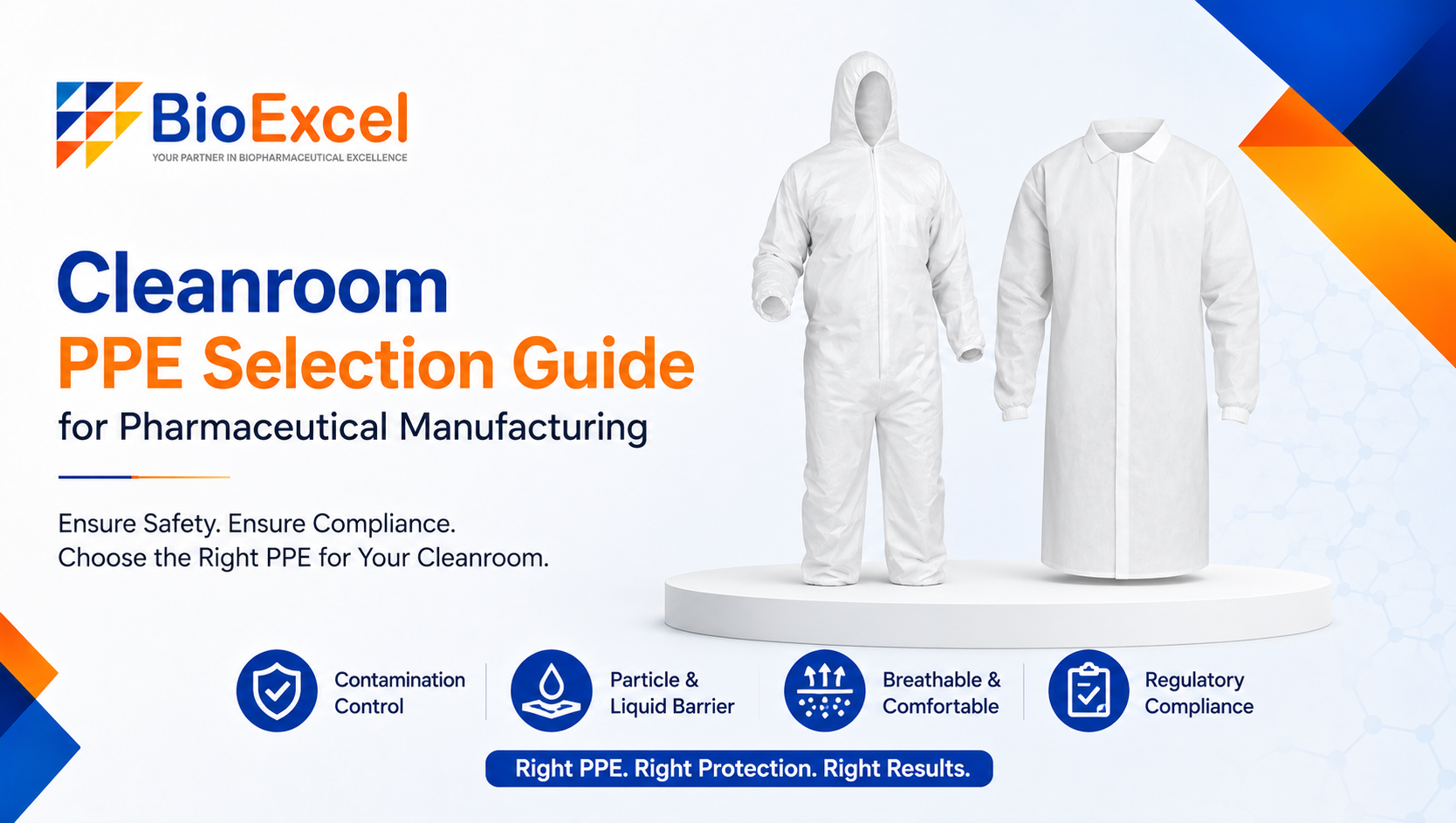
In the pharmaceutical and biotechnology manufacturing industry, product quality is dependent on far more than advanced equipment and validated processes. The people who are working inside controlled environments are one of the foremost potential sources of contamination. Skin flakes, hair, microorganisms, and even clothing fibers can compromise sterile manufacturing if proper Personal Protective Equipment (PPE) is not opted and used correctly. Human operators are one of the major contamination sources in cleanrooms, making proper gowning and PPE essential for contamination control.
Selection of the correct cleanroom PPE goes beyond merely putting on protective clothing. This needs to take into account the cleanroom class, regulations, manufacturing process, and sterility required in each particular case.
This guide breaks down how pharmaceutical and biotech manufacturers can opt for the correct sterile gloves, gowns, coveralls, masks, sleeves, shoe covers, and cleanroom garments to maintain compliance while making sure of maximum contamination control.
Why Cleanroom PPE Matters
Cleanroom PPE serves as a protective barrier between personnel and the sensitive manufacturing atmosphere. Every movement inside a cleanroom releases microscopic particles and microorganisms. Proper PPE significantly lowers this contamination risk while protecting both the product and the operator.
For pharmaceutical manufacturing, appropriate cleanroom garments help:
- Maintain aseptic processing conditions
- Reduce microbial and particulate contamination
- Support GMP compliance
- Protect sterile products throughout production
- Improve operator safety when handling hazardous materials
A well-designed PPE program is an essential component of contamination control strategies in pharmaceutical manufacturing.
Essential Cleanroom PPE Components
1. Sterile Gloves
Sterile gloves are the first line of defense against contamination. They prevent direct contact between operators and sterile products while protecting users from hazardous substances.
An ideal pair of cleanroom gloves should offer:
- Sterility assurance
- Low particulate generation
- Excellent tactile sensitivity
- Chemical resistance
- Comfortable fit for extended wear
Nitrile gloves are highly favoured owing to their puncture-resistance property, ability to resist chemicals, and the absence of latex, which is essential for pharmaceutical applications. At BioExcel Pharma, sterile nitrile gloves are provided to suit specific environmental conditions.
2. Cleanroom Gowns
Sterile gowns help minimize contamination generated from personnel during manufacturing operations.
Quality cleanroom gowns should provide:
- Low-lint construction
- Sterile packaging
- Lightweight breathable material
- Secure closures
- Excellent particle filtration
Depending on the cleanroom grade, gowns may be disposable or reusable after validated laundering procedures.
3. Cleanroom Coveralls
For high-grade pharmaceutical cleanrooms, full-body coveralls offer superior protection compared to standard gowns.
Benefits of coveralls include:
- Full-body coverage
- Reduced skin exposure
- Lower particle emission
- Better contamination containment
Coveralls are commonly used in aseptic filling, sterile drug manufacturing, biologics production, and vaccine manufacturing.
4. Face Masks
Respiratory droplets remain one of the primary contamination risks inside sterile production areas.
Cleanroom masks should provide:
- High bacterial filtration efficiency
- Comfortable breathing resistance
- Secure facial fit
- Low linting materials
Masks and respirators help maintain environmental cleanliness while protecting sterile products from operator-generated contaminants.
5. Cleanroom Sleeves
Sleeves provide additional arm protection during high-risk manufacturing activities.
They are commonly used when operators frequently interact with:
- Filling equipment
- Sterile transfer systems
- Isolators
- Biosafety cabinets
Sleeves reduce contamination while extending garment protection.
6. Shoe Covers
Footwear introduces significant contamination into cleanrooms if not properly controlled.
Sterile shoe covers help:
- Prevent dirt transfer
- Reduce particle shedding
- Maintain floor cleanliness
- Support contamination control procedures
Many pharmaceutical facilities also use boot covers for higher-grade cleanrooms.
7. Complete Cleanroom Garments
Complete cleanroom apparel may include:
- Hood & Bouffant caps
- Coverall
- Sterile gloves
- Face mask
- Goggles
- Sleeves
- Shoe covers
The complete garment system should work together to minimize exposed skin and particle generation throughout manufacturing operations. BioExcel Pharma offers complete sterile PPE kits that provide standardized and hassle-free protection.
Key Factors for Selecting Cleanroom PPE
Cleanroom Classification
The required PPE depends largely on the cleanroom classification. Higher ISO classes and GMP Grade A/B environments demand stricter gowning procedures than lower-grade manufacturing areas. Always select garments validated for your cleanroom classification.
Sterility Requirements
Not every manufacturing process requires sterile PPE. Determine whether your application requires:
- Sterile PPE
- Non-sterile cleanroom PPE
- Gamma sterilized products
- EtO sterilized products
Aseptic pharmaceutical manufacturing generally requires sterile PPE throughout critical operations.
Material Selection
Different materials provide different levels of protection. Common materials include Nitrile, Polypropylene, SMS fabric, Microporous film laminates, and Polyester cleanroom fabrics. The material should balance barrier performance, durability, breathability, and comfort.
Comfort and Ergonomics
Operators often wear PPE for several hours continuously. Poorly fitting garments can result in:
- Reduced productivity
- Operator fatigue
- Increased gown adjustments
- Higher contamination risk
A comfortable PPE will encourage compliance and prevent unnecessary movement within the cleanroom environment. Also, a comfortable and well-fitted PPE will allow concentration by the worker without contaminating the cleanroom.
Regulatory Compliance
Cleanroom PPE should comply with applicable pharmaceutical standards, including:
- Good Manufacturing Practices (GMP)
- ISO cleanroom standards
- USP requirements
- FDA expectations where applicable
- EU Annex 1 requirements for sterile manufacturing
Using validated PPE supports audit readiness and regulatory compliance.
Contamination Control Performance
Evaluate PPE based on particle shedding, microbial barrier properties, sterility assurance, packaging integrity, and compatibility with disinfectants. Products specifically designed for pharmaceutical cleanrooms deliver superior contamination control compared to general industrial protective clothing.
Best Practices for PPE Selection
When selecting cleanroom PPE:
- Match PPE to cleanroom classification.
- Choose sterile products for aseptic manufacturing.
- Prioritize low-lint materials.
- Ensure proper garment sizing.
- Verify regulatory certifications.
- Source products from trusted manufacturers.
- Train personnel on correct gowning procedures.
- Regularly review PPE performance and compliance.
Why Choose BioExcel Pharma for Cleanroom PPE?
Pharmaceutical contamination-free manufacturing requires proper cleanroom protection from any kind of contamination. BioExcel Pharma offers an entire line of sterile cleanroom consumables intended for pharmaceuticals, biotech labs, medical devices, and other labs.
Its cleanroom solutions include:
- Sterile Gloves
- Cleanroom Gowns
- Cleanroom Coveralls
- Face Masks
- Sleeves
- Shoe Covers
- Complete Cleanroom Garments
Manufactured to meet stringent quality and regulatory standards, these products help organizations strengthen contamination control while supporting GMP-compliant manufacturing operations.
BioExcel Pharma supplies top-notch cleanroom protective apparel and consumables, validated to global compliance standards, to safeguard sterile manufacturing environments.
Frequently Asked Questions
Conclusion
Choosing the right cleanroom PPE is a critical investment in product quality, patient safety, and regulatory compliance. From sterile gloves and gowns to coveralls, masks, sleeves, and shoe covers, every component contributes to maintaining a controlled manufacturing environment.
By considering cleanroom classification, sterility requirements, material quality, operator comfort, compliance standards, and contamination control performance, pharmaceutical and biotech manufacturers can build an effective PPE strategy that supports consistent, high-quality production.
Partnering with an experienced supplier like BioExcel Pharma ensures access to reliable, compliant, and high-performance cleanroom PPE solutions that help safeguard every stage of sterile pharmaceutical manufacturing.