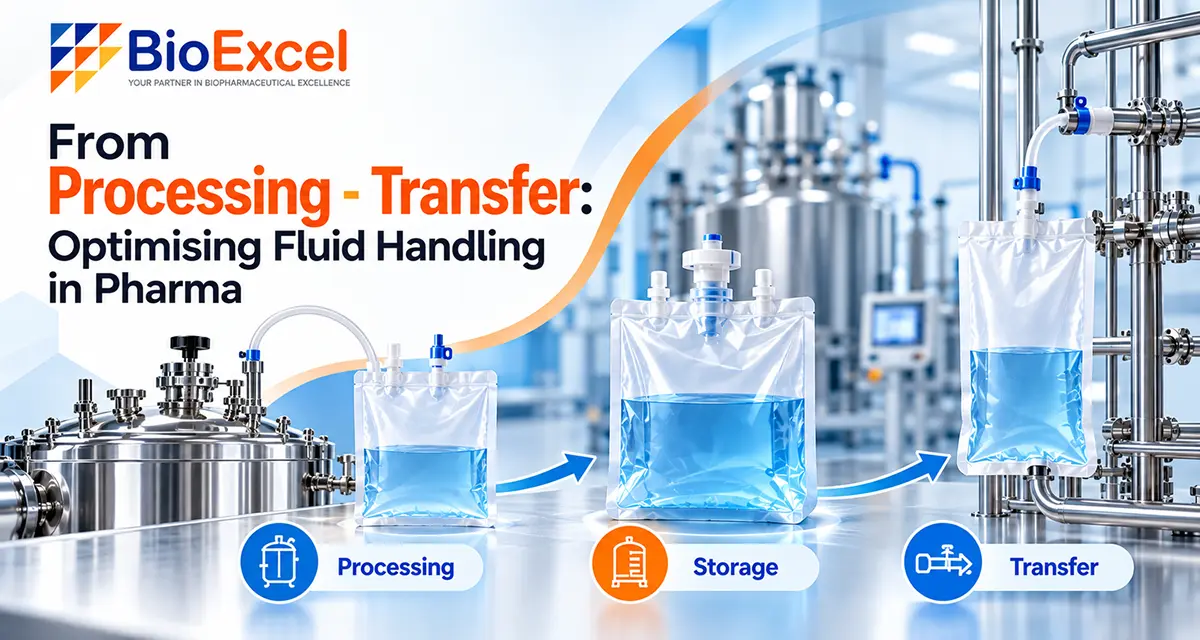
In pharmaceutical and biopharmaceutical manufacturing, fluid handling is involved in almost every stage of production. From buffer preparation and media handling to filtration, storage, sampling, and final transfer, the way process fluids are managed can directly influence product quality, sterility, efficiency, and overall process control.
As manufacturing processes become more sophisticated, pharmaceutical companies are increasingly looking for fluid handling solutions that reduce contamination risks while offering greater flexibility. This is where Downstream Fluid Handling Bags for Pharma applications are becoming increasingly relevant, particularly in processes where controlled, sterile, and reliable fluid transfer is essential.
Why Fluid Handling Matters in Pharmaceutical Processing
Fluid movement may appear to be a routine part of manufacturing, but it involves several critical considerations. Process fluids need to be transferred between different stages without compromising their quality or sterility.
Traditional stainless-steel systems can provide durability and large-volume processing capabilities, but they may also require cleaning, sanitisation, validation, and maintenance between batches. These requirements can increase turnaround time and operational complexity.
Modern single-use bioprocess bags provide an alternative for many applications. Since the product-contact pathway is replaced after use, manufacturers can simplify certain cleaning and changeover activities while supporting a more flexible manufacturing environment.
From Processing to Storage and Transfer
Fluid handling does not stop once a process is completed. Fluids may need to be temporarily stored, sampled, filtered, or transferred to another processing unit.
This makes the design of the complete fluid pathway important.
A well-designed system may incorporate bags, tubing, connectors, valves, filters, and other components that work together as a closed or controlled fluid pathway. The objective is to minimise unnecessary exposure and maintain process consistency during movement.
For example, sterile storage bags can be used for buffers, media, WFI, and other process fluids. Depending on the application and required volume, 2D and 3D bag formats can provide different storage and handling advantages. BioExcel Pharma’s single-use portfolio includes storage and transfer solutions designed for different volume requirements.
Key Factors When Selecting Fluid Handling Bags
Choosing a fluid handling bag should involve more than simply selecting the required capacity. The process conditions and characteristics of the fluid also need to be considered.
1. Material Compatibility
The bag material should be compatible with the fluid being handled. Chemical compatibility, temperature, contact time, and process conditions can influence material performance and product quality.
2. Sterility and Contamination Control
For pharmaceutical applications, maintaining sterility is critical. Gamma-irradiated, integrity-tested single-use systems can support controlled processing and reduce the risk associated with reusable product-contact equipment.
3. Connectors and Tubing
The connection system is an important part of the fluid pathway. Luer, tri-clamp, quick-connect, and other connection options can be selected according to the process configuration. Secure connections can help reduce leakage and support efficient transfer.
4. Volume and Bag Configuration
The required working volume should be considered carefully. Smaller 2D bags may be suitable for certain storage and transfer applications, while larger 3D systems can support higher-volume fluid handling.
5. Extractables, Leachables and Integrity
For pharmaceutical and biopharmaceutical processes, manufacturers should consider extractable and leachable data, material documentation, sterilisation records, and bag integrity. These factors become particularly important when fluids have extended contact with polymeric materials.
Improving Efficiency with Single-Use Fluid Handling
One of the major advantages of pharmaceutical fluid handling solutions is the potential to simplify operations.
Single-use systems can reduce the need for repeated cleaning and sterilisation of product-contact components. They can also support faster changeovers and greater flexibility when manufacturing multiple products or working with changing batch requirements.
However, single-use does not mean selecting any disposable bag. The complete assembly should be evaluated according to the process, fluid characteristics, volume, connection requirements, sterility expectations, and regulatory documentation.
Building a More Reliable Fluid Transfer Process
Optimising fluid handling is ultimately about looking at the complete process rather than one individual component.
The right combination of bags, tubing, connectors, filters, and transfer equipment can help create a controlled pathway from processing to storage and final transfer. This approach can improve operational consistency while supporting contamination control and efficient manufacturing.
For pharmaceutical and biopharmaceutical manufacturers, sterile fluid transfer bags can therefore become an important part of a flexible single-use strategy.
Optimising Biopharmaceutical Fluid Handling
A well-designed single-use fluid transfer system integrates compatible bag materials, secure connectors, and verified integrity to maintain sterility and process consistency from processing to storage and final transfer.
Frequently Asked Questions (FAQs)
Conclusion
Efficient fluid handling is an essential part of maintaining quality and consistency across pharmaceutical manufacturing. From processing and storage to filtration and transfer, every stage requires careful consideration of sterility, compatibility, integrity, and operational efficiency. With appropriately selected Downstream Fluid Handling Bags Pharma, manufacturers can build more flexible and controlled fluid pathways for modern bioprocessing.
Explore BioExcel Pharma’s single-use fluid handling solutions to identify the right configuration for your pharmaceutical or biopharmaceutical process.